

Invisible Threat: Calgary's Air Quality Under the Microscope
People are talking about Calgary's air quality data from CRAZ. It's updated regularly, but just a heads-up—it’s not fully vetted yet. Use it wisely!
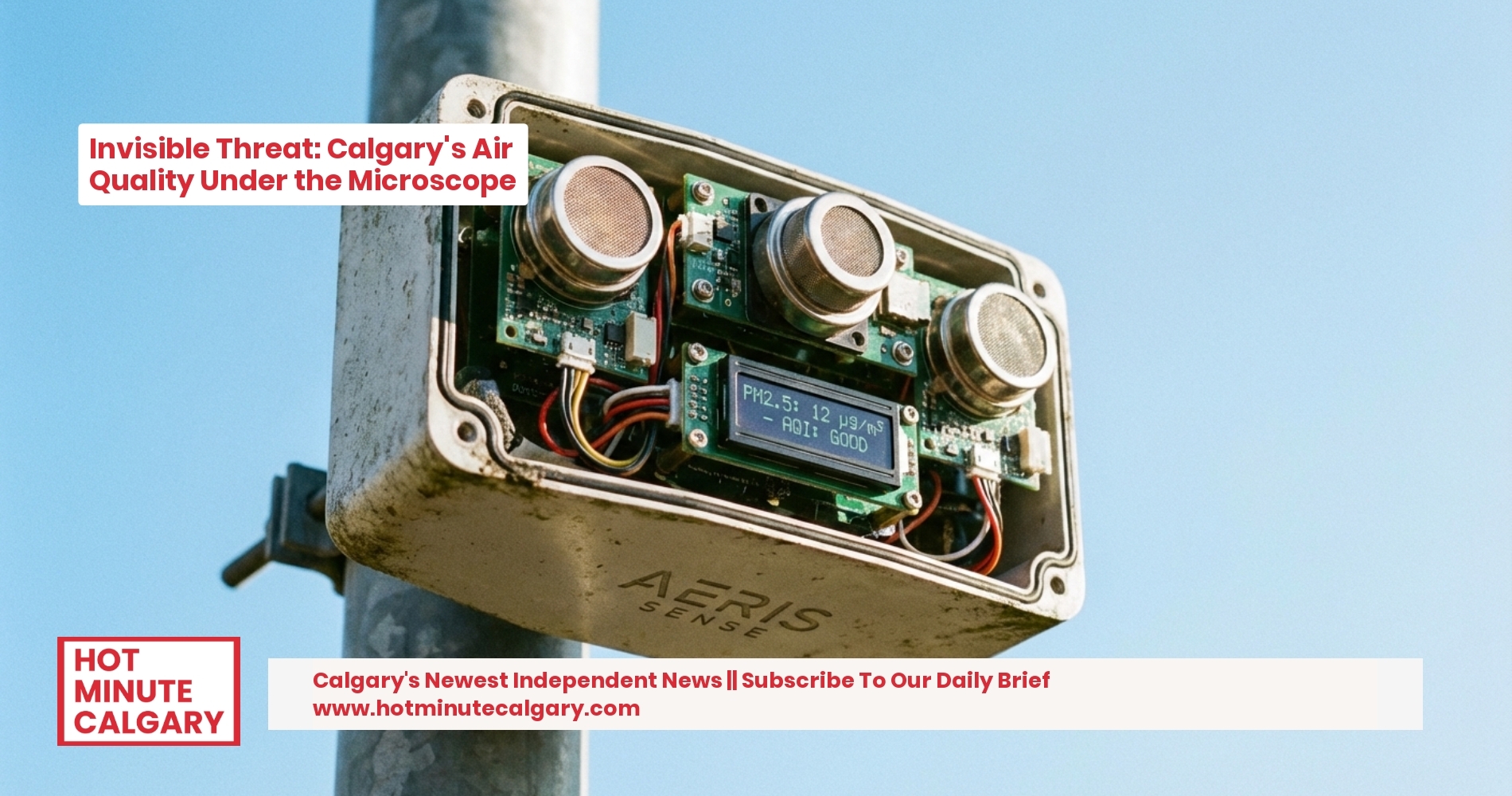
In a city as vibrant as Calgary, where the skyline meets the Rockies, it’s easy to overlook an invisible, yet persistent, concern: the quality of the air we breathe. Daily average fine particulate matter (PM2.5) concentrations are meticulously tracked by the Calgary Region Airshed Zone (CRAZ), a non-profit dedicated to monitoring air quality across the region. This vital data is then submitted to Alberta Environment and Protected Areas (AEP), the provincial body overseeing air quality. It's crucial for Calgarians to understand that while this near real-time data is accessible, it has not yet undergone the full suite of quality assurance processes, and thus should be considered with discretion.
The implications of compromised air quality for our city are far from abstract. Human-caused air pollution within the CRAZ Region, which encompasses Calgary, translates into significant tangible costs and health impacts. Each year, approximately 490,855 restricted activity days occur, where individuals reduce their normal routines due to illness or injury linked to the air. More gravely, this pollution is tied to an estimated 234 emergency room visits, 57 hospital admissions, and a sobering 377 premature deaths annually across the region. The economic toll is equally stark, with an estimated $2.94 billion in losses from healthcare costs and reduced productivity.
To combat this, Alberta operates under the **Alberta Environmental Protection and Enhancement Act (EPEA)**, which empowers AEP to establish **Alberta Ambient Air Quality Objectives (AAAQOs)**. For PM2.5, the objective is set at 29 µg/m³ as a 24-hour average concentration, a benchmark designed to safeguard human health. Locally, the City of Calgary's Community Standards Bylaw plays its part, requiring residents to take precautions to prevent smoke and dust from becoming a nuisance, and regulating wood-burning firepits – even allowing for bans during periods of poor air quality.
The Ongoing Debate on Environmental Priorities
Despite these measures, not everyone believes the current framework goes far enough. Critics like Phillip Meinzter of the Coalition for Responsible Energy voice concerns, stating, "We want to draw this line and show people that the provincial government is choosing to put energy companies above the interests of Albertans." This sentiment, often articulated at rallies across Calgary, reflects a broader tension regarding the balance between the province's energy sector and its commitment to environmental protection and public health, including issues like abandoned oil and gas wells.
Ultimately, the continuous monitoring of fine particulate matter by organizations like CRAZ remains a critical tool. While the raw, near real-time data comes with a disclaimer, it offers an immediate glimpse into our city's respiratory health. For Calgarians, understanding these numbers, the policies that govern them, and the ongoing dialogue about environmental stewardship is essential. It reinforces that protecting our big sky country extends beyond its picturesque vistas to the very air we breathe, demanding vigilance and collective action from the Bow River Valley to the city limits and beyond.
Comments ()