Calgary Water Restrictions: Chinook Winds Threaten Ice Rinks
Calgary faces Stage 4 water restrictions due to a main break, risking rink ice.
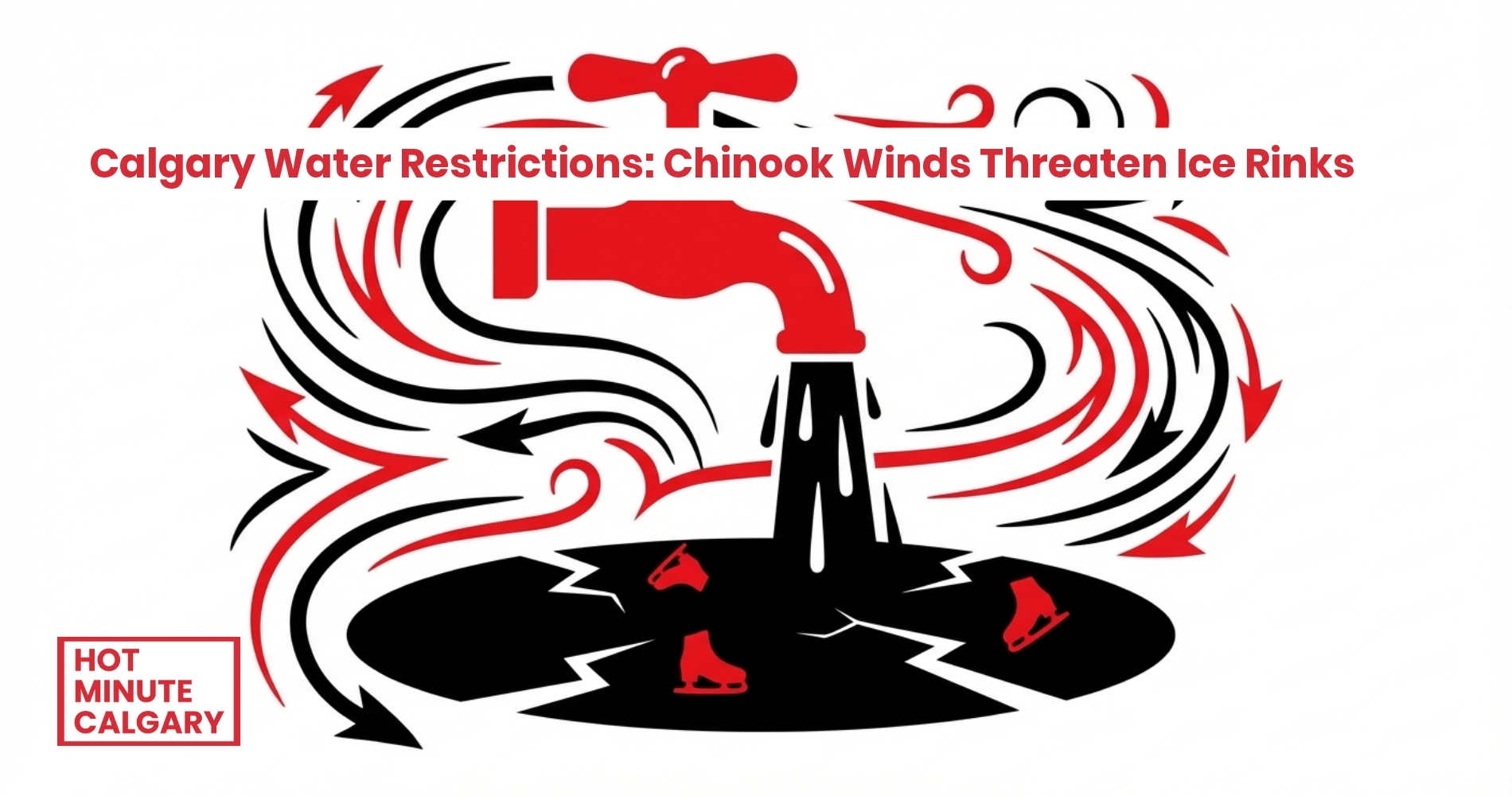
CALGARY — A significant water-main break near 16 Avenue NW in Calgary has led to the implementation of Stage 4 Outdoor Water Restrictions, halting all outdoor flooding using city water. These restrictions, enforced due to the break of the Bearspaw South feeder main, are impacting community outdoor rinks as warm Chinook winds are forecasted to hit the city, further threatening the integrity of ice surfaces.
The Deeper Context
The water-main break, which has necessitated these restrictions, highlights ongoing infrastructure challenges in Calgary. The city confirmed that Stage 4 restrictions are in place, requiring citizens to minimize non-essential water use. This incident echoes previous infrastructure issues, such as the June 2024 Bearspaw feeder main failure, which also led to extended water restrictions and an independent review. Despite the restrictions, volunteers continue to maintain rinks using alternative methods like buckets and melted snow, although these practices are not officially endorsed by the city. The Chinook winds, expected to bring above-freezing temperatures, are likely to exacerbate the situation by softening the ice, making it more challenging to maintain safe skating conditions.
The Critics & Costs
Calgary Mayor Jeromy Farkas has expressed concerns over the city's water levels, labeling the current usage as unsustainable. The restrictions impact not only rink users but also the volunteers who dedicate their time to maintain these community facilities. Without the ability to flood rinks with city water, communities are left to explore alternatives like trucking in rural water, although this approach lacks official verification. The strain on community resources and volunteer efforts underscores the broader implications of infrastructure failures on civic life and recreational facilities.
Looking ahead, the city faces pressure to address these infrastructure challenges more effectively. An independent report, although unverified in city communications, allegedly recommends accelerating steel pipe upgrades by early 2027. The community and city council must navigate these immediate challenges while planning for long-term solutions to prevent future disruptions.