

Calgary Growth: City Faces Geographic Divorce Amid Housing Crisis
Calgary's growth is splitting the city in two.
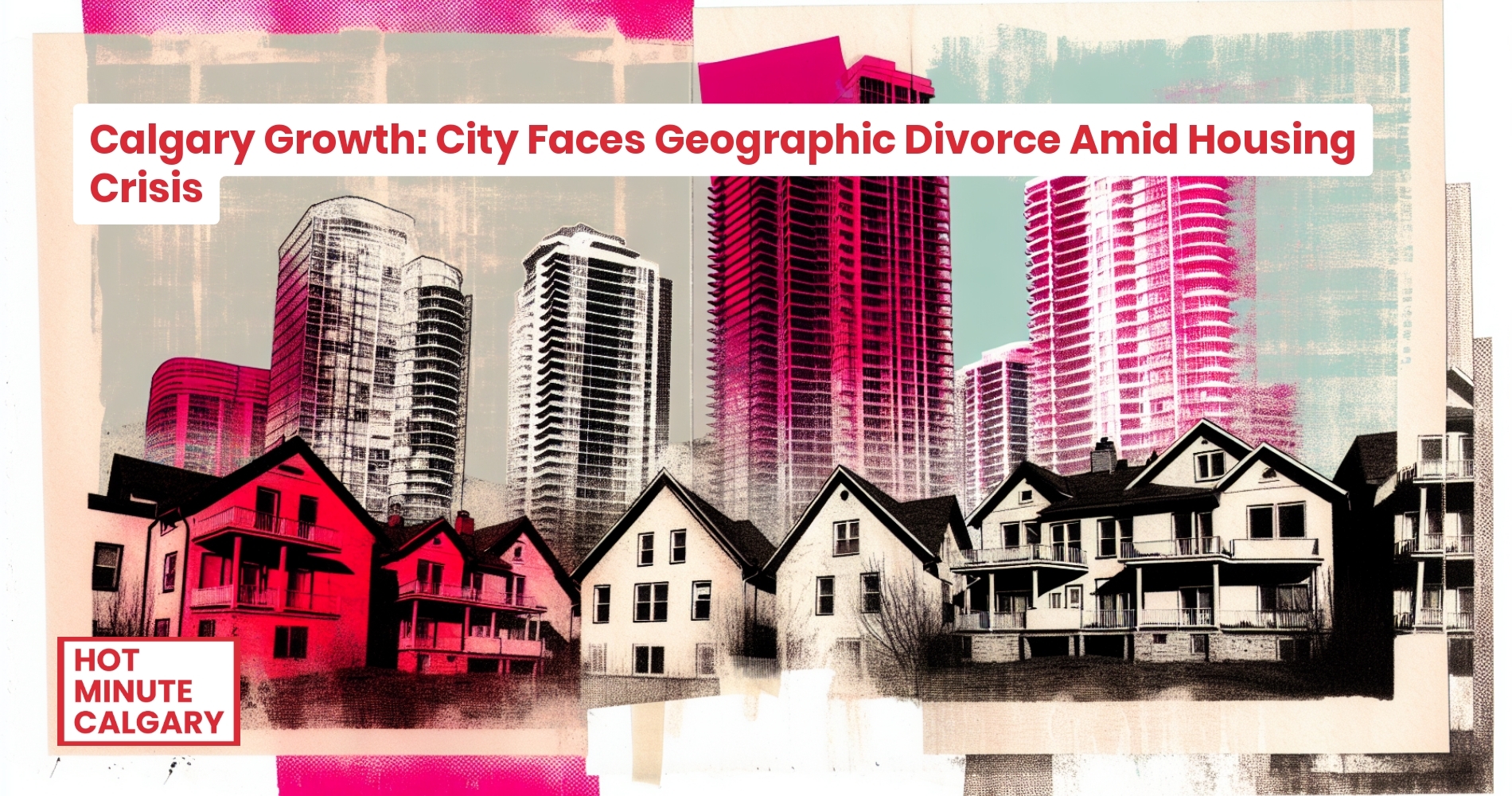
CALGARY, AB — Calgary isn't growing together anymore. It's splitting in two.
While gleaming towers of apartments stack up in places like Livingston and Seton—communities that didn't exist when most Calgarians bought their first homes—nearly 80% of the city's established neighborhoods are bleeding residents or sitting still. The data from early 2026 paints a stark picture: about 65% of all new Calgarians are landing in just a handful of suburban zones, leaving a hollow ring of 1970s bungalows where aging homeowners rattle around alone in houses built for families that no longer live there.
This isn't sprawl as usual. It's a geographic divorce.
The New North Pulls Away
The North Sector—anchored by Livingston and Glacier Ridge—captured nearly 27% of all suburban growth in 2025. Housing starts in Calgary's North and South sectors hit record highs last year, with apartments making up 60% of new builds. Townhouse permits in these growth zones jumped 117% in a single year.
These aren't bedroom communities. Seton, in the southeast, operates as a regional employment hub thanks to the South Health Campus. People work there, eat there, and increasingly, stay there. It's becoming a city within a city, insulated from the boom-and-bust cycles that hammered older suburbs.
The profile of these new residents? Interprovincial migrants from Ontario and BC, many drawn by Alberta's comparatively affordable rents and Premier Danielle Smith's tax policies. They're moving into row houses and mid-rise apartments, not the single-family lots that defined Calgary's last growth wave.
The Hollow Middle: Where Schools Close While Houses Appreciate
Drive through Silver Springs, Huntington Hills, or Lake Bonavista—communities built between 1965 and 1980—and you'll see a paradox. Property values remain sky-high. Population density is cratering.
One-person households now represent over 25% of residents in these established areas. The kids moved out. The parents didn't. And the "Missing Middle" housing—duplexes, row houses, the stuff that could bring in young families—hasn't materialized fast enough to refill the demographic gap.
The school crisis makes it tangible. Neighborhood schools in these aging communities face under-enrollment and potential closures, while new schools in Auburn Bay and Evanston are operating at 120% capacity, stuffing kids into portables.
The Rezoning Fight That Froze the Middle
The friction hit a breaking point in late 2025 with Calgary's Citywide Rezoning initiative—dubbed "Blanket Rezoning" by its critics. The policy aimed to unlock Missing Middle housing across established neighborhoods by allowing duplexes and row houses by right, the same way suburban developers can stack townhomes in Livingston without a fight.
But a public backlash in established communities—homeowners worried about parking, density, and "neighborhood character"—stalled momentum. Next month, in March 2026, Mayor Jeromy Farkas and Calgary City Council will face a massive public hearing where residents and developers will clash over whether to repeal or heavily amend the rules.
The result of that uncertainty? Investors are sitting on their hands. Why gamble on a fourplex in Huntington Hills when you can build a block of townhouses in Glacier Ridge without the political headache?
What It Means
Calgary is stretching. A high-density ring of new life is forming around a thinning, aging core. The city's growth isn't lifting all neighborhoods equally—it's concentrating in zones where the rules are clear and the demand is loud, while older communities wait to see if policy will let them evolve or force them to fade.
The March hearing will determine whether Calgary's middle can catch up, or if the split becomes permanent.


Comments ()