

Calgary Co-op Closures: Grocery Giants Tighten Grip
Calgary Co-op closures highlight grocery market shifts.
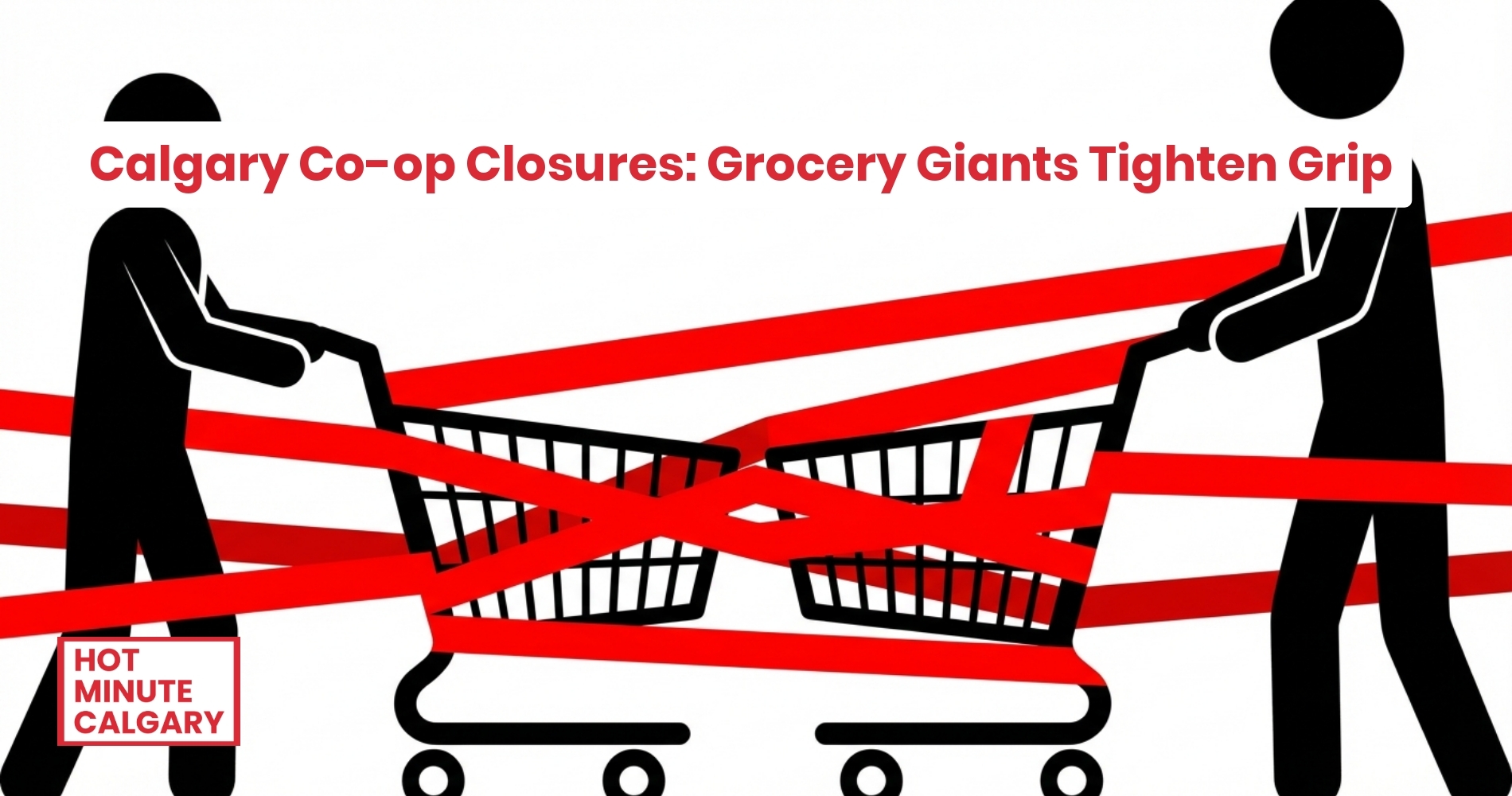
CALGARY — The grocery war in Calgary just claimed two more casualties. Calgary Co-op is shuttering its Sage Hill and Hamptons stores on March 28, 2026, leaving Northwest shoppers with fewer choices and a growing suspicion that the fix is in.
CEO Ken Keelor says it's about "evolving market conditions" and moving money to winners like the redone North Hill location. Translation: The co-op is bleeding out while the big three—Loblaws, Sobeys/Safeway, and Save-On-Foods—are printing cash. These closures follow the Beddington store's 2023 death, and the pattern is clear. The little guy is getting crushed.
The Profit Party
While Co-op posted a $10 million loss in 2024—down from $16.7 million in 2023 and $38.7 million in 2022—the corporate giants are throwing themselves a profit parade. Loblaw Companies Ltd. saw Q1 net income jump 9.6% to $503.0 million, then pulled in $757 million in Q2. Empire Company Ltd. (Sobeys/Safeway) banked $173 million in Q4 fiscal 2025, climbing to $212 million in Q1 fiscal 2026.
Meanwhile, Calgarians watched food prices spike 4.9% year-over-year in December 2025. Nationally, grocery inflation hit 3.5% in 2025, up from 2.2% in 2024. The math is simple: They're making money. You're losing it.
When Your Grocer Might Be Dirty
Then there's the Pattison Group's side hustle. Jim Pattison Developments—the real estate wing behind Save-On-Foods—is in talks with the U.S. Department of Homeland Security to sell a Virginia warehouse. The buyer? U.S. Immigration and Customs Enforcement (ICE), which plans to turn it into a detainee facility.
The BC Green Party and B.C. Attorney General Niki Sharma have called for a boycott of Pattison businesses, including Save-On-Foods, urging Canadian leaders to cut ties with ICE operations. For shoppers trying to make ethical choices, it's one more reason to ask: Where does my grocery dollar actually go?
The Regulators Wake Up
Ottawa finally noticed the game is rigged. The Grocery Code of Conduct went live January 1, 2026, promising transparency between suppliers and retailers. Bill C-59 amendments to the Competition Act, effective June 20, 2025, let private citizens sue over deceptive marketing and gave the Competition Tribunal teeth to impose fines.
The Competition Bureau launched formal probes in March 2024 into Loblaw and Sobeys over restrictive property controls—basically, deals that prevent competitors from moving into empty stores. The Bureau's study concluded what everyone already knew: Canada's grocery sector is a cartel in everything but name.
The Hustle for Alternatives
Faced with shrinking options and rising prices, Calgarians are improvising. Some are signing up for "Oddbunch," a service selling produce rejected by grocery stores. Others are driving to warehouse clubs for bulk meat or making longer treks to the remaining Co-op stores.
The Competition Bureau's investigations roll on, with final guidance on property controls still pending. The Grocery Code is supposed to level the field. But for now, shoppers are left navigating a market where the house always wins—and two more doors just slammed shut.
Comments ()