

Buried Beneath the White Stuff? Unpacking Calgary's Residential Snow Plan
The Gist: Why Your Street Isn't Bare Pavement (Yet)
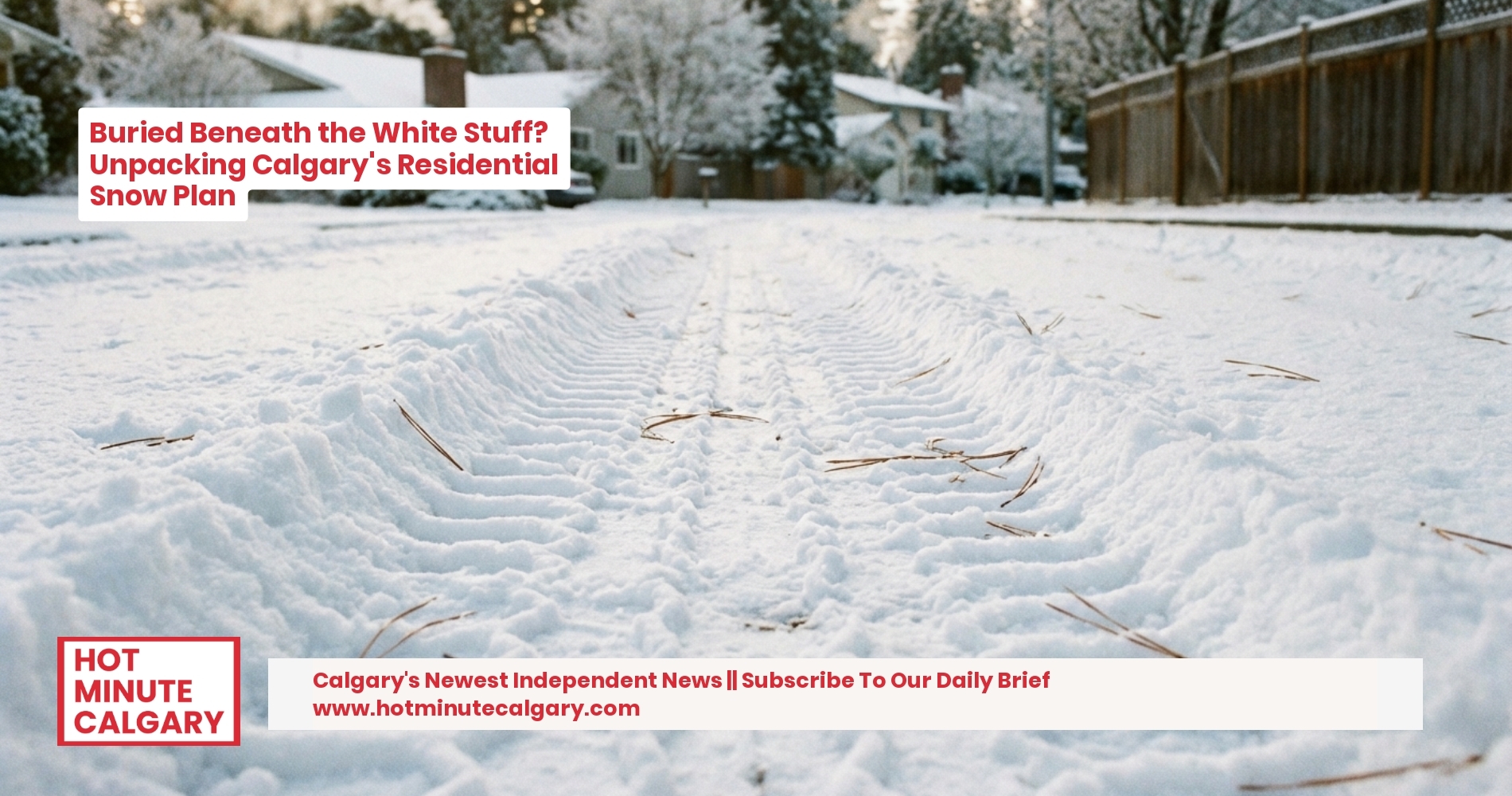
After a week of persistent snowfall, including a record-setting 17.8 centimeters on November 23rd, many Calgarians are looking out their windows at residential streets still resembling winter wonderland trails, not paved roadways. So, is this 'normal'? For Calgary, yes, largely. The City of Calgary's snow removal policy typically doesn't involve plowing residential streets down to bare pavement or removing snow from these areas. Instead, the focus is on leveling ruts and applying materials like sand or salt only when necessary.
Impact on Calgarians: Your Driveway, Your Sidewalk, Your Wallet
This policy means your daily commute, even just to the end of your block, can be an adventure. While major thoroughfares get rapid attention, your local street often waits. But the snow doesn't just affect driving; it impacts walking too. As a property owner, you're legally required to clear snow and ice from public sidewalks bordering your property down to the bare surface within 24 hours of a snowfall ending. Failing to do so isn't just a neighbourly faux pas; it can lead to a $250 fine for a first offense. And those pesky windrows – the snow piles left by plows – are generally your responsibility to clear from in front of your driveway. Councillor Ray Jones once highlighted the broader implication: "The idea of the snow and ice policy is to minimize economic loss to the community, and economic loss is people stuck in their house for five to seven days." This underscores that unmanaged snow has a tangible impact beyond just inconvenience.
The Reality Check: City Priorities and Your Street's Turn
The city operates on a priority-based snow plan. Major roadways, known as Priority 1 routes, are the first to be tackled, ideally within 0-18 hours after a snowfall concludes. Following these, crews move to major community and transit routes (Priority 2), which are addressed 18-36 hours after the snow stops. It's only beyond this 36-hour mark that city crews might, if needed, undertake tasks like leveling ruts in residential areas. So, while Deerfoot Trail gets immediate attention, your street in Ward 11 might be a lower priority, meaning you could be waiting a while.
The Flip Side: A Balancing Act of Responsibility
This approach isn't without its critics. Kelly Jones, representing the Martindale Community Association, voiced concerns back in 2011 about less frequent residential plowing, stating, "You can't give it and then take it away without having a proper reason or a different plan to help us out." There's also a significant division of labour when it comes to sidewalks: the City of Calgary is only responsible for clearing about 10% of the city's sidewalks, leaving the remaining 90% to private property owners. And remember, shoveling snow from your private property onto public spaces like roads or bike lanes is illegal under Calgary Traffic Bylaw 26M96.
The Bottom Line: Know the Rules, Be Prepared
So, when you see a week's worth of snow still lingering on your residential street, it's not an oversight; it's generally in line with Calgary's established snow maintenance policy. Understanding this system is crucial for every Calgarian. Be prepared to clear your own sidewalks, manage your windrows, and navigate streets where the focus is on rut-leveling, not bare pavement. Your proactive efforts are key to keeping our communities moving, even after a significant dump of the white stuff.
Comments ()