

Alberta Independence: Petition Push Escalates Tensions
Alberta's independence petition sparks national debate.
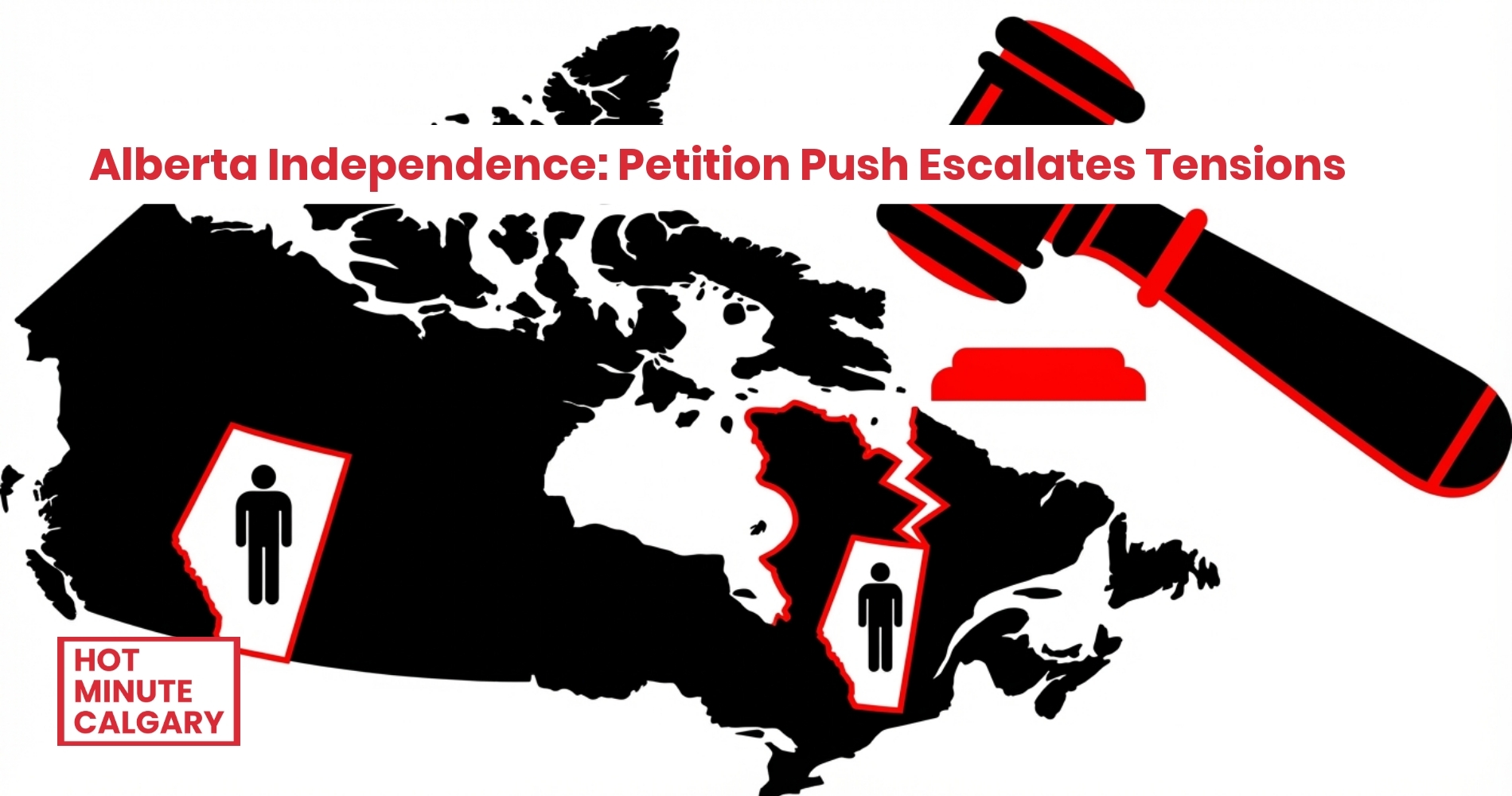
CALGARY — Over 150 canvassers fanned out across the Big Four Building today, clipboards in hand, feeding a "massive line" of Albertans ready to sign their names to a single question: Should this province go it alone?
The crowd isn't here for rodeo season. They're here to push the "Alberta Declaration of Independence" petition past the finish line—177,732 valid signatures by May 2, 2026. Hit that number, and Alberta gets dragged into a referendum on whether to blow up Confederation. But while the enthusiasm in the room is palpable, the fine print of what they are signing is astronomically expensive.
How We Got Here
This isn't just a grassroots movement; it’s a path paved by recent legislation. The petition got the green light thanks to Bill 54 and Bill 14, the latter of which removed judicial oversight on the constitutionality of referendum questions.
Premier Danielle Smith swears she's not a separatist, yet her government built the highway this movement is driving on. However, the legal road ahead is mined with obstacles. The Supreme Court has been clear: a simple "50% + 1" victory isn't a golden ticket. It only triggers a negotiation. And if those negotiations fail and Alberta declares independence unilaterally, it risks becoming a "legal pariah" with no international recognition—similar to Kosovo.
The "Money Pitch" vs. The Reality Check
The Alberta Prosperity Project (APP)—the group running this show—has a dazzling sales pitch. They claim an independent Alberta would inherit a $334 billion chunk (53%) of the Canada Pension Plan and run massive budget surpluses.
But independent analysis suggests these numbers are a "fiscal mirage".
- The Pension Gamble: Experts argue the 53% figure is "impossible" and a real transfer would be closer to 17%. Worse, a standalone Alberta Pension Plan would rely entirely on a volatile resource economy. If the oil sector crashes and workers leave, the plan could be forced to cut benefits or hike premiums to survive.
- The Debt Load: Independence isn't a clean break; it’s a divorce settlement. Alberta would likely be required to assume its share of Canada’s sovereign debt, estimated at $150 billion to $250 billion.
- Startup Costs: The "surplus" the APP promises ignores the billions needed to build a military, a central bank, and a border agency from scratch. Even replacing the RCMP with a provincial police force is estimated to cost an extra $200 million annually over current levels.
The Landlocked Trap
While U.S. Treasury Secretary Scott Bessent might be watching, Washington isn't likely to be a savior. An independent Alberta would be a landlocked energy exporter, desperate to move product through hostile territory.
We don't have to guess what happens next; we can look at South Sudan. When they separated in 2011, they took the oil but left the pipelines in the north. Disputes over transit fees led to a total shutdown of production and economic collapse. Without a coastline, an independent Alberta would have no legal right to transport oil through Canada , leaving the province vulnerable to exorbitant transit fees or blockades that could cripple the budget.
The "Indigenous Veto"
The biggest hurdle isn't in Ottawa; it's right here. The Sturgeon Lake Cree Nation has already launched a lawsuit, and for good reason: Treaties 6, 7, and 8 are agreements with the Crown, not the province.
Legal experts warn that the "Honor of the Crown" cannot be unilaterally transferred to a new republic. If First Nations do not consent to join a new Alberta, the province could be legally partitioned. Treaty lands could remain part of Canada, turning an independent Alberta into an archipelago of disconnected islands, separated from the very resource corridors it needs to survive.
What Happens Next
The signature drive runs until May 2, 2026. Elections Alberta is already prepping for a potential vote. But as the line outside the Big Four keeps moving, the question remains: Are these signatories buying a ticket to prosperity, or are they co-signing a bill for years of litigation, capital flight, and economic isolation?.
The province watches to see if 177,732 people can blow the roof off the country—and if they’re ready to pay for the repairs.
Comments ()