

Alberta Economy: The Fast Lane Through Tariff Fog
Alberta's job surge and tourism boom outpace the nation amid tariff fog.
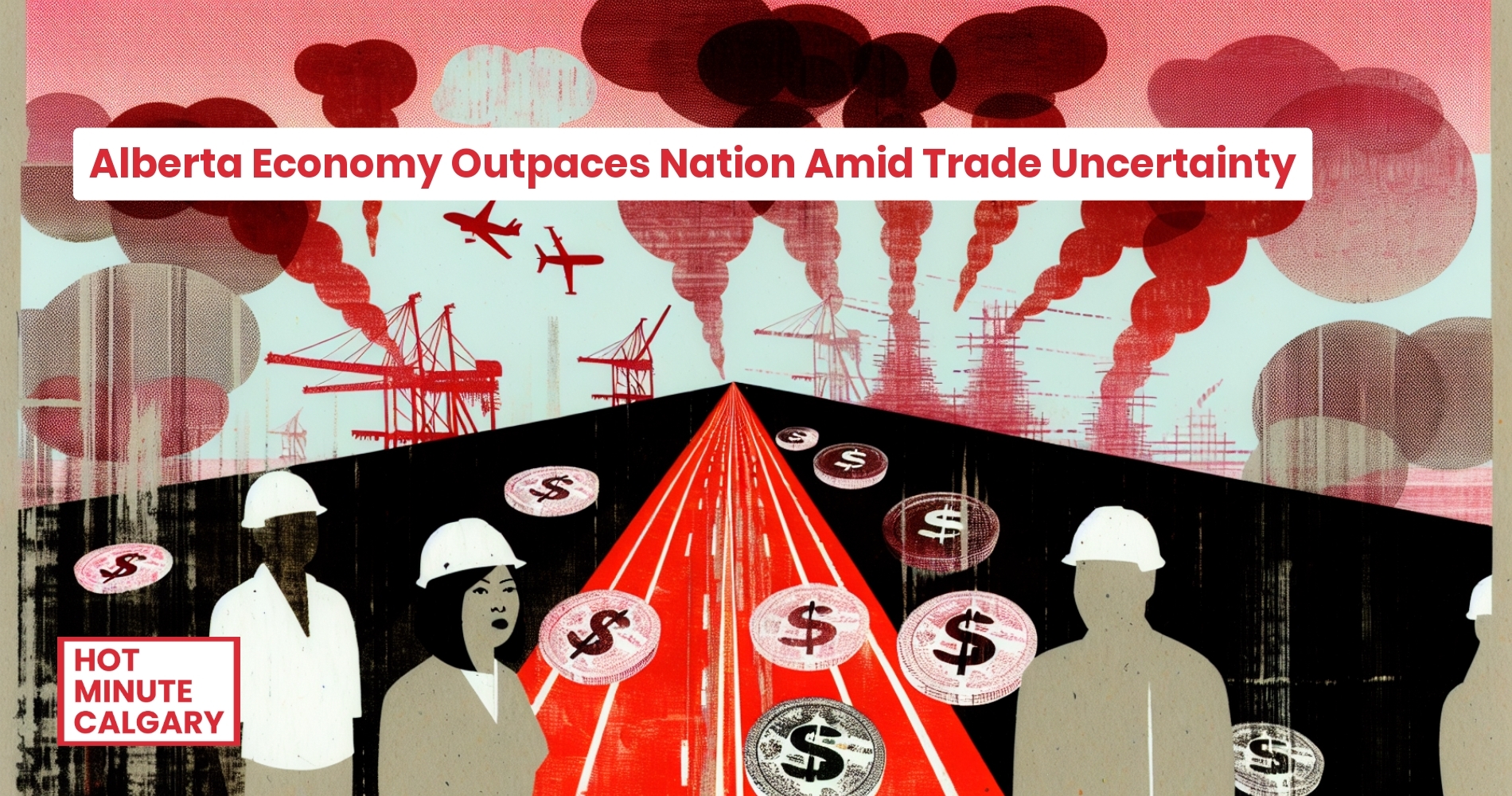
CALGARY, AB — While trade uncertainty keeps the Bank of Canada in a holding pattern, Alberta's economy is punching through the fog with job growth and tourism numbers that leave the rest of the country in the dust.
On February 11, the U.S. House of Representatives voted to end the so-called "fentanyl tariffs" on Canada—a symbolic win that still needs Senate approval and faces a near-certain presidential veto. Translation: no immediate relief, but a signal that political appetite for cross-border trade remains alive south of the 49th.
Job Market Leaves National Average Behind
Alberta added 79,000 jobs in 2025, a 3.1% year-over-year increase that smoked the national average. While Canada's broader labour market has cooled, the province's momentum suggests economic resilience isn't just a buzzword—it's showing up in paycheques.
ATB Economics warns that without major new projects, overall momentum may slow. Still, expect more balance in housing and labour markets as population growth cools, not a hard stop.
Tourism Surge Fuels Service Exports
Non-resident visits to Alberta jumped 11% year-to-date through November 2025, while the national figure sat at -0.4%. The province is cementing its status as a tourism exporter—travel services are a $28.5 billion national export, and Alberta is capturing an outsized share.
More direct flights are part of the answer. A new non-stop route between Calgary and Abu Dhabi, operated by Etihad Airways, launches later this year to boost tourism and trade connections.
Bank of Canada Admits: We Don't Know Either
The Bank of Canada released its January rate deliberations this week, essentially shrugging at the future. "It was unusually difficult to effectively assign weights and probabilities to the various risks surrounding the outlook," officials admitted. The policy interest rate remains at 5.00%, with the central bank firmly in wait-and-see mode.
AI Data Centres Target Olds
Two major AI data centre projects—the Synapse Data Center and Swiss-backed Data District—are proposed for Olds, Alberta. The town's location between Calgary and Edmonton, access to natural gas, and skilled workforce make it a magnet for energy-intensive tech investment.
It's not just a local play. U.S. AI infrastructure spending by Meta, Amazon, Microsoft, and Alphabet now represents 2.1% of American GDP—larger than the 1950s interstate highway build. Alberta is positioning to capture a slice of that capital.
Precious Metals Hit Olympic Proportions
Gold is trading around $5,000 USD per ounce, and silver is near $80 USD per ounce—multi-decade highs driven by industrial demand and investor jitters. A 2026 Olympic gold medal, containing 500 grams of silver and 6 grams of gold, is now worth approximately $3,400 CAD in raw materials. That's triple the value of Beijing 2022 medals.
The Productivity Puzzle: R&D That Doesn't Pay
Canada exports R&D services but pays far more than it earns for the right to use intellectual property—a sign that homegrown innovation isn't translating into commercial success. The C.D. Howe Institute's research shows the country is strong on input, weak on output.
The University of Calgary is tackling the problem with a $6 million federal grant (spread over 15 years) to lead national research on productivity challenges, led by Professor Trevor Tombe.
Grande Prairie: Young, Growing, Energy-Rich
Grande Prairie, with a median age of 35, is projected to outpace Calgary and Edmonton in population growth through 2051. Positioned on the Montney and Duvernay basins, the city is leveraging improved market access from the Trans Mountain Expansion and LNG Canada to attract energy-intensive industries, including proposed AI data centres.
The region is moving up the value chain in forestry, agriculture, and healthcare while cementing its role as a logistics hub for over 300,000 people.
What This Means for Calgarians
Trade fog isn't lifting, but Alberta's fundamentals—jobs, tourism, energy access, and tech investment—are holding strong. The CUSMA review looms in July, and sectoral tariffs are expected to stay in place through 2026. Geography and supply chains still matter more than headlines.
For now, the province is in the fast lane. The question is how long the road stays clear.



Comments ()