

Alberta Deficits: Premier Smith Warns of Financial Storm Ahead
Premier Smith warns of looming deficits without cuts or tax hikes.
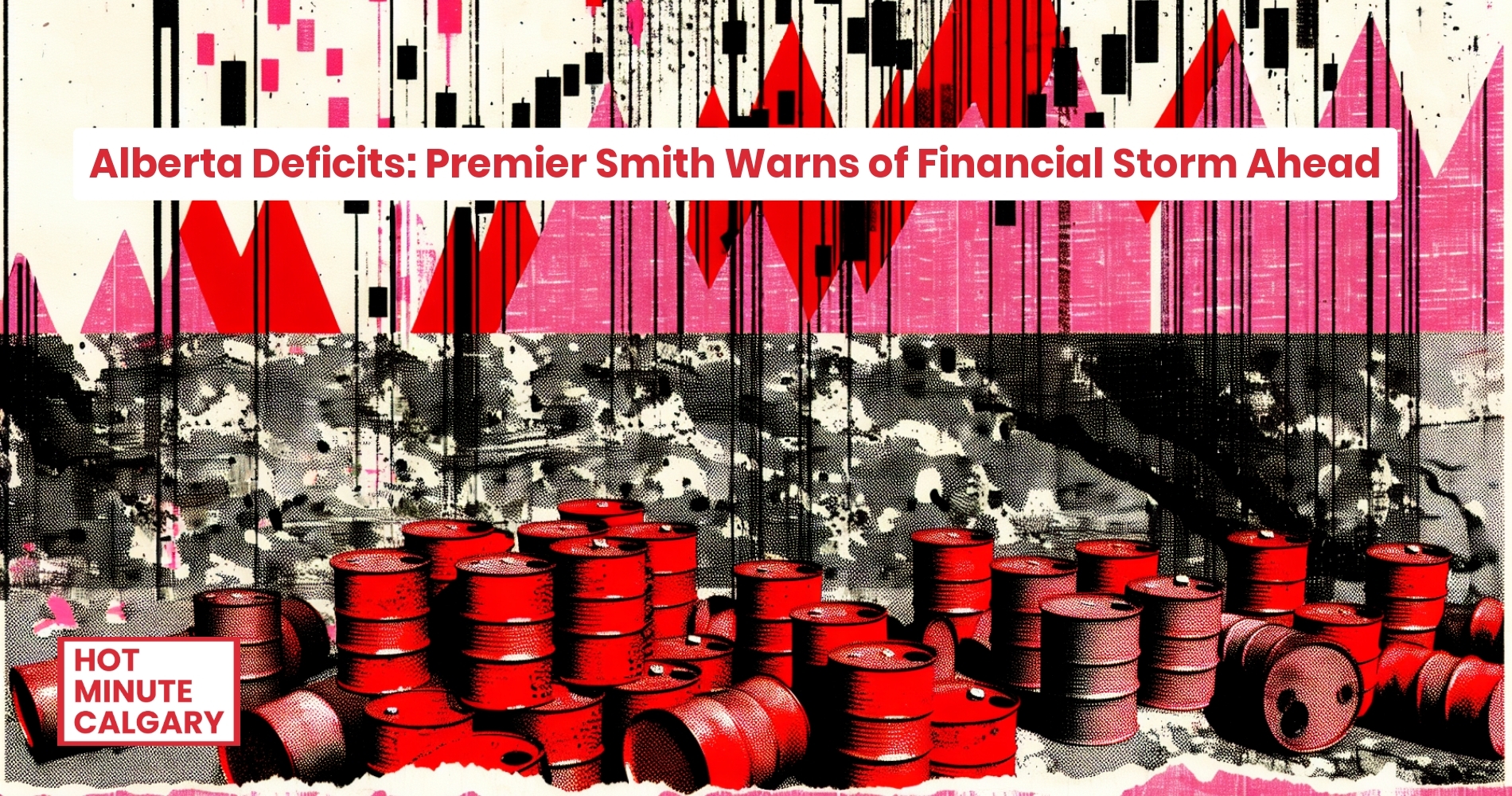
CALGARY, AB — Premier Danielle Smith stood before the press today and delivered the fiscal equivalent of a weather forecast nobody wanted to hear: "significant" deficits are coming, and there's no tax hike or spending axe to save the day.
The warning lands as Alberta's treasury faces a grinding reality check—oil revenues continue to underwhelm, and the province is staring down back-to-back years of red ink. Smith's government has already revised its FY2025-26 deficit projection from an initial $5.2 billion to $6.4 billion, driven by crude prices that refuse to cooperate and program spending that keeps climbing.
Now, with Budget 2026 expected to drop later this month, Smith is pre-emptively closing the door on the two traditional fiscal escape hatches: raising taxes or slashing services. Translation? Albertans should expect more of the same—deficits financed by debt, with the government betting on an eventual oil price rebound to bail them out.
The Venezuela Wild Card
Complicating the picture: chaos in Caracas. The U.S. capture of former Venezuelan president Nicolas Maduro has sent shockwaves through global oil markets, and Alberta's industry is watching closely. Venezuela's collapse has historically been a boon for Canadian heavy oil—less competition, higher prices. But the geopolitical turbulence could also disrupt supply chains and refining partnerships that Alberta producers depend on.
Smith acknowledged the uncertainty today, though she offered no specifics on how her government plans to insulate the province from potential fallout. "Albertans are scratching their heads," she said, referencing the disconnect between global oil drama and the province's inability to capitalize on its own reserves.
The Fiscal Trap
Here's the math problem Smith inherited—and amplified. The province introduced a new 8% personal income tax bracket in January 2025, cutting revenue by $600 million annually. At the same time, operating expenses have ballooned by $1.7 billion compared to the original 2025 budget, driven by hospital costs, education, and wildfire disaster spending.
Oil prices, meanwhile, have averaged $64.50 USD per barrel this fiscal year—well below the $68 assumed in Budget 2025. Every dollar drop costs Alberta $750 million in lost revenue. The result: taxpayer-supported debt is now forecast to hit $42 billion, or 8.7% of GDP, by the end of FY2026.
The NDP's Court Ellingson has branded this "fiscal incompetence," pointing to the UCP's decision to cut taxes while revenues tanked. Municipal leaders, meanwhile, have been told not to expect provincial bailouts—Finance Minister Nate Horner made that clear at the Alberta Municipalities conference in November.
The Bet
Smith's strategy is a gamble on recovery. Under the Sustainable Fiscal Planning and Reporting Act, the province must return to balance within three years of running a deficit. That clock started ticking in 2025. Without tax hikes or major cuts, the only path back to black is higher oil prices or dramatic economic growth.
Neither is guaranteed. And with global oil markets now shadowed by Venezuela's implosion and U.S. geopolitical maneuvering, Alberta's fiscal fate is tied to forces well beyond Smith's control.
Budget 2026 is expected to be tabled before the end of February. Until then, Albertans are left to wonder whether their premier's refusal to raise taxes or cut deep is principled leadership—or wishful thinking with a $6 billion price tag.

Comments ()